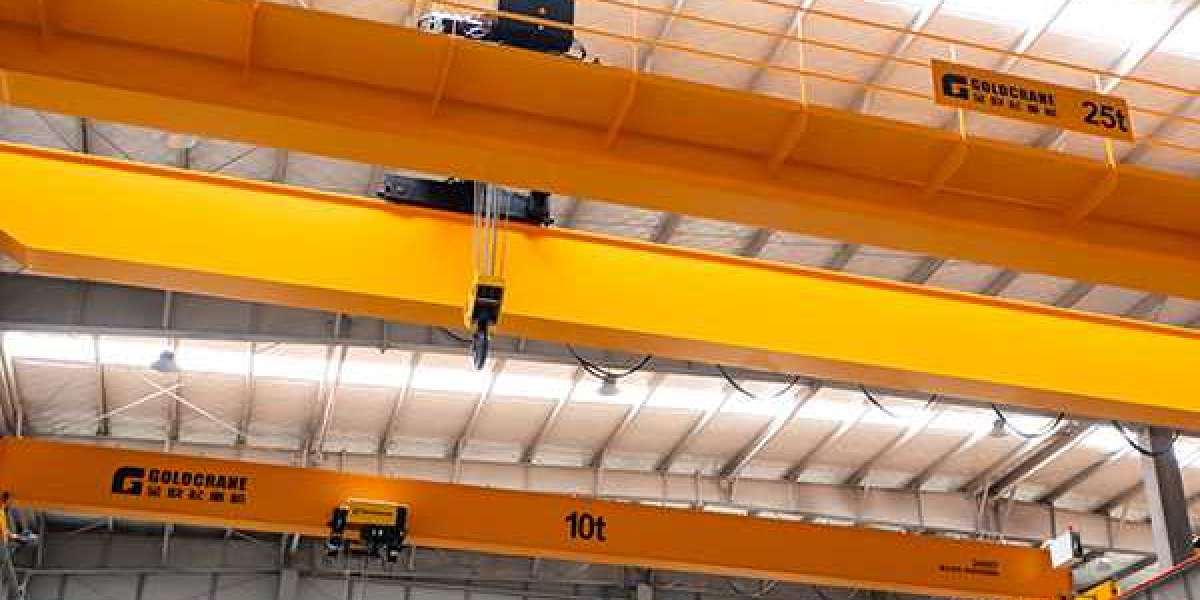

In heavy-duty material handling environments, lifting equipment must deliver structural integrity, operational stability, and long-term reliability. A 25t Double Girder Crane represents a critical asset in open warehouses, freight yards, railway stations, and port cargo areas where high-capacity lifting is routine and downtime is costly.
Unlike light-duty overhead cranes, a double girder configuration distributes load stress across two main beams, enhancing rigidity and minimizing deflection under rated capacity. For operations requiring frequent lifting cycles and outdoor exposure, this structural advantage becomes essential.
At Goldcrane, crane systems are engineered not only to meet rated capacity requirements but to ensure sustained performance under demanding working conditions.
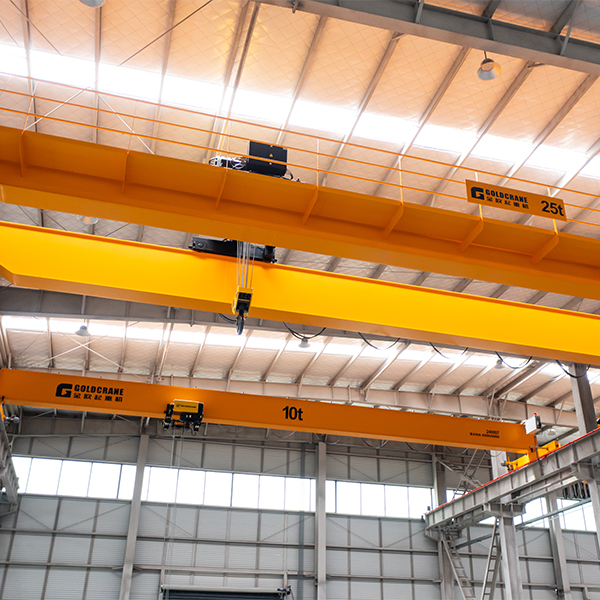
Core Technical Specifications and Engineering Parameters
Understanding the engineering envelope of a 25t Double Girder Crane is essential for proper selection and deployment.
Capacity Range: 5–200 tons
While 25t is a standard mid-range configuration, modular engineering allows scalable solutions across broader industrial requirements.
Lift Height: 6–20 meters
Customizable lifting heights enable adaptation to warehouse stacking systems, container handling, or bulk cargo operations.
Span: 3–40 meters
Flexible span options allow integration into diverse facility layouts, including wide yard configurations and rail-side installations.
Protection Class: A5–A6
Designed for medium to heavy working duty cycles, A5–A6 classification ensures suitability for frequent load handling with moderate dynamic stress.
Working Temperature: -20°C to +60°C
This wide thermal tolerance makes the crane suitable for both cold-region freight stations and high-temperature port environments.
These parameters position the 25t Double Girder Crane as a versatile and durable solution for outdoor and semi-exposed industrial applications.
Structural Engineering: Why Double Girder Matters
A double girder crane offers several structural and operational advantages over single girder alternatives:
Enhanced Load Stability
The two-girder arrangement provides:
Reduced beam deflection
Improved torsional resistance
Higher hook approach efficiency
This structural stability is particularly critical when handling long or asymmetrical loads.
Optimized Hoist Integration
In double girder systems, the hoist typically travels on rails mounted atop the girders, allowing:
Higher lifting height within the same building clearance
Increased lifting capacity
Better mechanical balance
This configuration improves vertical working space utilization—an important factor in high-density storage yards.
Long-Term Durability
Under repetitive loading conditions, fatigue resistance becomes crucial. The double girder framework distributes dynamic loads more evenly, reducing stress concentration and prolonging service life.
Goldcrane designs incorporate reinforced weld joints, high-grade structural steel, and precision alignment to ensure operational longevity.
Application Environments: Built for Demanding Outdoor Operations
The 25t Double Girder Crane is specifically suited for:
Open warehouses
Storage yards
Railway freight stations
Port dock cargo areas
Heavy industrial workshops
Outdoor installations require protection against environmental factors such as:
Wind load
Dust ingress
Temperature fluctuations
Humidity and corrosion
Goldcrane integrates weather-resistant electrical enclosures, corrosion-protected steel components, and stable drive systems to ensure consistent performance across diverse climatic conditions.
Adaptability Through Specialized Spreaders
Operational versatility is enhanced by compatibility with various spreaders, enabling specialized lifting tasks such as:
Container handling
Steel coil lifting
Bulk material grabs
Magnetic lifting systems
Beam and pipe handling attachments
Matching the crane with appropriate lifting devices significantly improves efficiency and safety in sector-specific operations.
For example, in railway freight stations, tailored spreaders can optimize wagon loading cycles. In port applications, customized attachments streamline container or bulk cargo transfer.
Safety and Operational Efficiency
Industrial lifting operations demand strict adherence to safety standards and precise motion control.
Key performance considerations include:
Smooth acceleration and deceleration
Anti-sway control mechanisms
Reliable braking systems
Overload protection
The A5–A6 duty classification ensures that the crane is engineered for sustained operational cycles without compromising mechanical integrity.
Operational efficiency is not solely about speed—it is about controlled movement, minimal load oscillation, and accurate positioning.
Conclusion
The 25t Double Girder Crane stands as a cornerstone of efficient heavy-duty material handling. With its structural stability, adaptable span and lift height configurations, A5–A6 duty classification, and suitability for harsh outdoor environments, it delivers reliability where performance margins are critical.
From open yards to port docks, from railway freight stations to industrial warehouses, a properly engineered crane ensures safe, efficient, and cost-effective lifting operations.
By combining structural engineering expertise with practical operational insight, Goldcrane provides lifting solutions designed for durability, precision, and long-term industrial value.