

Industrial processing environments are becoming increasingly demanding as manufacturers push toward higher throughput, tighter tolerances, and more automation. Within these production ecosystems, heavy duty vibration motors play a critical operational role: they deliver consistent, controllable vibrational force required for conveying, compacting, screening, de-blinding, and material flow optimization across a vast portfolio of equipment.
As sectors such as mining, quarrying, bulk solids handling, food processing, and construction move toward higher system uptime, vibration technology must evolve accordingly. Manufacturers like SUDA MOTOR are reshaping this domain with ruggedized motor architectures engineered for extended operation under severe mechanical stress and variable environmental conditions.
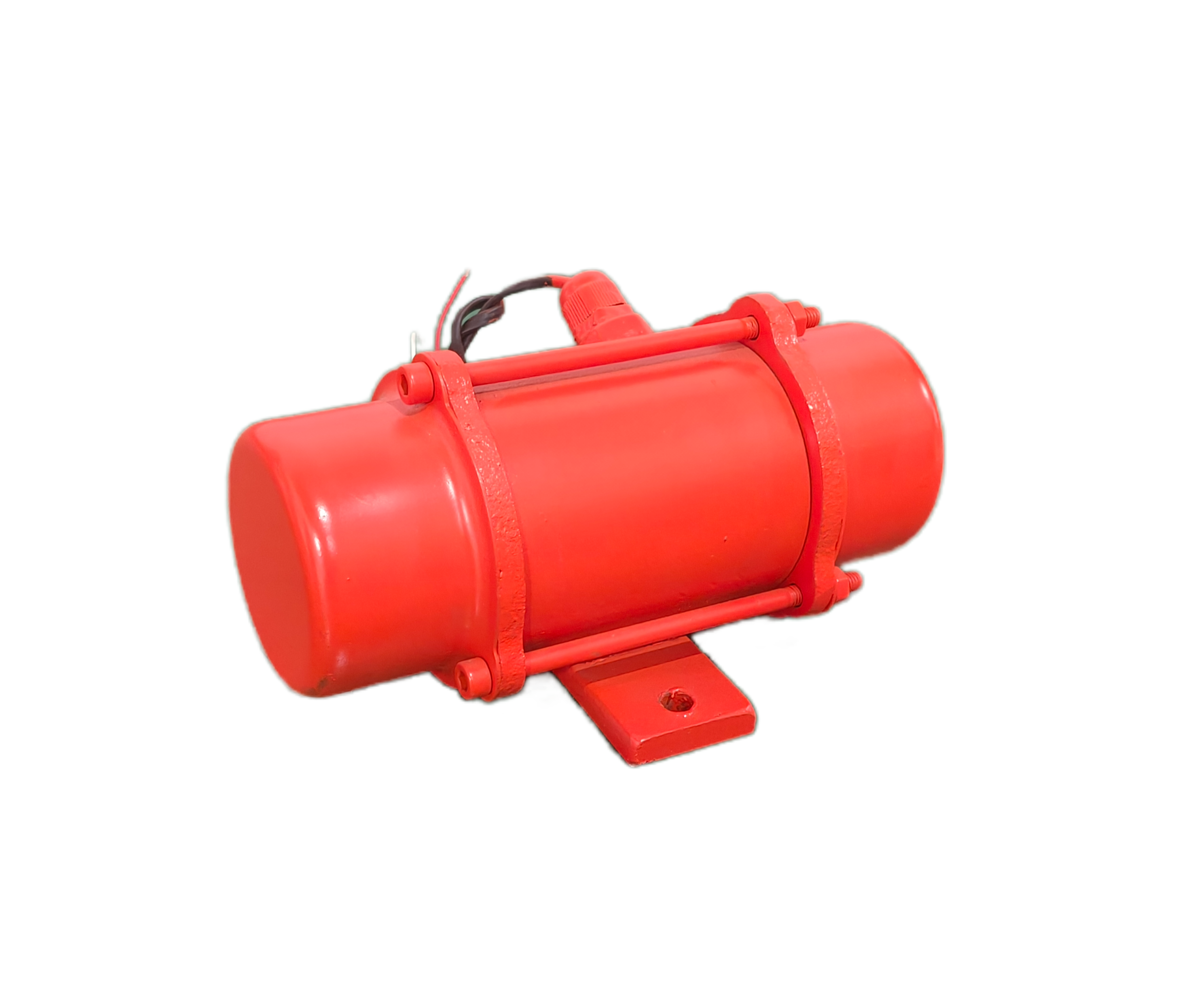
1. Engineering Foundations: What Defines a Heavy Duty Vibration Motor
A heavy duty vibration motor is specifically designed to generate strong and stable centrifugal force through rotating eccentric weights. While compact DC vibration motors exist for consumer and light industrial uses, heavy duty units prioritize:
• High vibration amplitude and adjustable centrifugal force
Industrial tasks require vibration forces that range from several kilograms to multiple tons. Heavy duty motors incorporate adjustable eccentric blocks, enabling operators to fine-tune output force without replacing components.
• Robust mechanical architecture
To withstand continuous operation in demanding environments, heavy duty vibration motors rely on high-strength housings, oversized bearings, hardened shafts, and precision balancing. Heat dissipation and structural alignment are critical to prevent premature wear.
• Duty cycle optimization
Many industrial vibration applications require 24/7 operation. As a result, these motors must support long duty cycles, thermal stability, and consistent torque output over thousands of hours.
• Environmental resistance
Dust, moisture, thermal shock, corrosive atmospheres, and high impact environments can degrade standard motors. Heavy duty vibration motors mitigate these risks through sealed designs (IP65–IP68), reinforced insulation systems, and vibration-resistant mounting.
2. Key Performance Parameters for Heavy Duty Vibration Motors
When specifying vibration motors for heavy industrial applications, engineers typically evaluate the following parameters:
2.1 Centrifugal Force (kN)
The most critical performance indicator, centrifugal force is the effective output that drives material movement or compaction. Industrial motors can produce forces from 0.1 kN for small hoppers to 150 kN or more for large screens or compactors.
2.2 Frequency and Amplitude
Frequency determines the vibrational speed, while amplitude governs the displacement force. Matching both to specific equipment (screens, feeders, tables, silos) allows optimal material behavior.
2.3 Power Rating and Efficiency
Heavy duty vibration motors often operate between 0.12 kW and 15 kW. Efficiency, thermal class, and cooling design define long-term reliability in hot or continuous environments.
2.4 Bearing Durability
Large dynamic loads place extreme strain on bearings. Premium motors feature:
Heavy-load deep groove or cylindrical roller bearings
Lubrication systems engineered for high-frequency motion
Vibration-resistant bearing housings
2.5 Mounting Versatility
To integrate into diverse industrial systems, vibration motors must support multiple mounting orientations without performance degradation.
3. Industrial Applications Where Heavy Duty Vibration Motors Are Essential
3.1 Screening and Classification
Vibratory screens require precise vibration profiles to separate materials by size. Heavy duty motors provide stable force output, enabling consistent particle stratification across screen decks.
3.2 Material Conveying
Linear and circular vibratory feeders use motor-generated excitation to move materials at controlled feed rates. This is crucial in mining, pharmaceuticals, food production, and chemical processing.
3.3 Hopper and Silo Flow Aids
Bulk solids often exhibit bridging or rat-holing. Vibration motors eliminate flow obstructions and ensure consistent material discharge.
3.4 Compaction and Densification
Concrete compaction tables, foundry molds, and packaging lines rely on heavy vibration to remove air pockets, improve density, and standardize final product quality.
3.5 De-blinding
Industrial screens can clog when processing moist or fine materials. Heavy duty vibration motors deliver pulse forces that clear mesh openings in real time.
4. How SUDA MOTOR Elevates Heavy Duty Vibration Motor Engineering
SUDA MOTOR integrates advanced mechanical engineering and quality control protocols to deliver high-reliability motors optimized for extreme environments. Their product line is distinguished by:
• Precision-engineered eccentric weight systems
Operators can fine-tune vibration force without disassembling the motor, improving flexibility across applications.
• High-grade alloys and sealed housings
To resist corrosion, fatigue, and dust ingress, SUDA MOTOR employs industrial-grade castings, protective coatings, and sealing technologies.
• Thermal protection and overload safeguards
Heat buildup is a major source of motor failure. SUDA designs include enhanced cooling channels, premium insulation, and smart overload protection.
• Extended bearing life
Oversized, high-load bearings with enhanced lubrication significantly extend service intervals and reduce downtime.
• Application-specific customization
From low-frequency high-amplitude models to high-frequency precision units, SUDA MOTOR offers customized vibration profiles tailored to each customer’s processing equipment.
5. Conclusion
Heavy duty vibration motors are indispensable components in modern industrial systems, serving as the core driving force behind efficient screening, conveying, compaction, and material flow reliability. As global industries push toward higher performance and reduced downtime, the engineering quality behind these motors becomes a strategic operational asset.
Manufacturers like SUDA MOTOR are pushing the boundaries of vibration motor design with durable housings, precision-balanced rotors, high-load bearings, and application-specific engineering. For organizations seeking dependable, long-service-life vibration technology, SUDA MOTOR provides a comprehensive and technically robust solution portfolio.