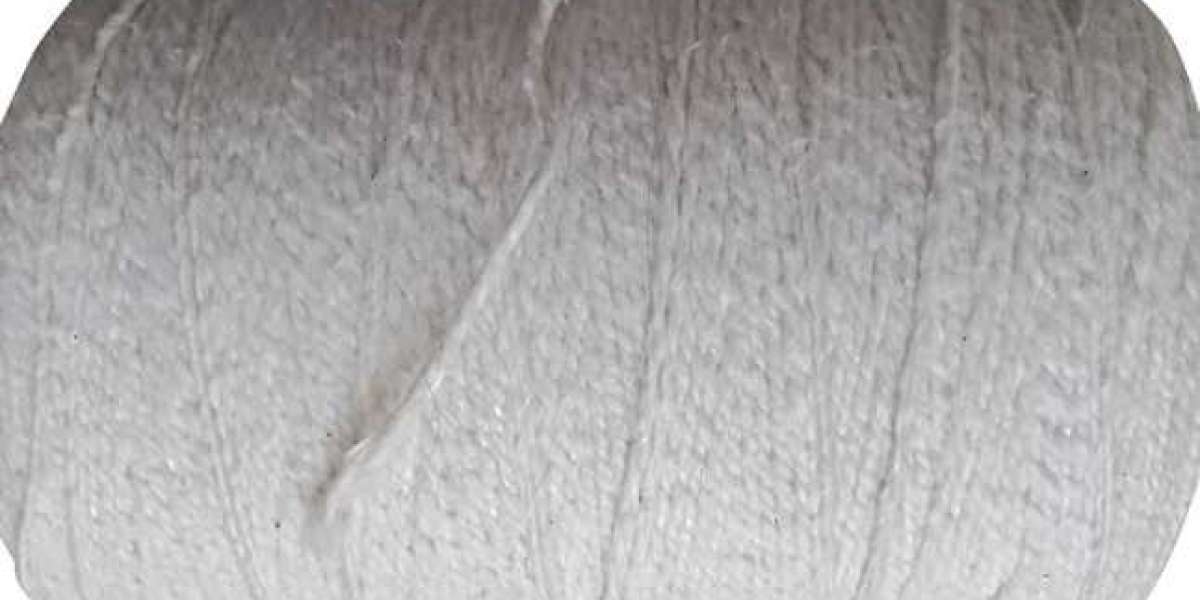

When product teams evaluate Non-Flammable Yarn, they are usually trying to balance safety, process reliability, and final-product quality. A second reason buyers look for Non-Flammable Yarn is that the material must work smoothly through production, not just perform well in a test report. In technical textiles, the best choice is often the one that stays consistent, supports efficient manufacturing, and remains dependable after storage, handling, and repeated use.
1. What Makes a Technical Yarn Worth Selecting
A useful technical yarn is defined by structure as much as by performance. Fiber composition, twist balance, surface finish, and diameter consistency all affect how the yarn behaves on the machine and in the finished textile. If one section of the spool differs too much from another, the result can be uneven tension, unstable stitching, or weak spots that become visible only after production has begun.
Buyers should treat the sample as a working material, not a marketing sample. A good spool should unwind cleanly, feel balanced, and maintain a steady character across its length. If the yarn is too fuzzy, too inconsistent, or too difficult to control, it can create extra labor and waste. Small problems at the fiber stage often become much larger once the yarn is scaled into full production, which is why careful inspection matters before a purchase is approved.
2. Matching the Yarn to the End Product
Different applications place different demands on the same type of material. A yarn used in insulation layers may need stronger structure and more stable handling, while a yarn used in stitched assemblies may need better flexibility and cleaner feed. The buyer should start with the final product, not with a generic category, because the correct choice depends on where the yarn will live and how it will be processed.
Environmental conditions also matter. Humidity, repeated folding, pressure during storage, and contact with other materials can all affect the result. A yarn that performs well in a lab or showroom may behave differently in an actual factory environment. That is why practical sampling is so important. The right material should remain useful after transport, inventory rotation, and routine handling, not just on the day it is delivered.
3. Black-Fire Procurement Notes for Consistency
Procurement teams make better decisions when they review more than one sample and compare them under the same conditions. A yarn should be evaluated for winding quality, surface uniformity, and resistance to damage during handling. If it shifts noticeably between samples, that variation can become a supply problem later. Consistency is one of the clearest signs that a material can support repeat orders without changing production habits.
Documentation supports the decision, but the physical sample is what proves whether the yarn will actually work. A specification sheet may look strong, but the spool itself shows how the material behaves when it enters the workflow. Buyers who combine technical information with hands-on review are usually less likely to face rework, delays, or complaints from production teams. That kind of practical thinking is one of the best ways to reduce risk in procurement.
4. Production Efficiency and Machine Behavior
A yarn that feeds smoothly through equipment can save time at every stage of production. If it resists tension, breaks too easily, or sheds excessively, operators may need to slow the line and correct problems before output can continue. Over a long run, those interruptions become expensive. The most efficient materials are often the ones that help the machine keep moving without constant adjustment.
Machine behavior also affects quality. A yarn that runs cleanly tends to produce more even results, which reduces defects in the final textile. That matters for factories that need repeatable output and tight deadlines. Efficient processing is not only a labor issue; it is a quality issue too. When the yarn supports stable operation, the whole workflow becomes easier to control and the finished product is more reliable.
5. Long-Term Value and Smarter Sourcing
Long-term value comes from durability, consistent performance, and the ability to reorder the same material with confidence. A yarn that holds its character over time can reduce replacement cycles and limit costly process changes. Buyers should also think about storage, inventory planning, and whether the material can be sourced again without major variation. These factors often matter more than a small difference in initial price.
The strongest purchasing decisions are built on repeatability. When the yarn stays consistent from batch to batch, production teams can keep using the same settings and avoid unnecessary adjustments. That stability saves time and supports better product quality over the long run. For current product details and sourcing information, visit https://www.black-fire.net/product/ .