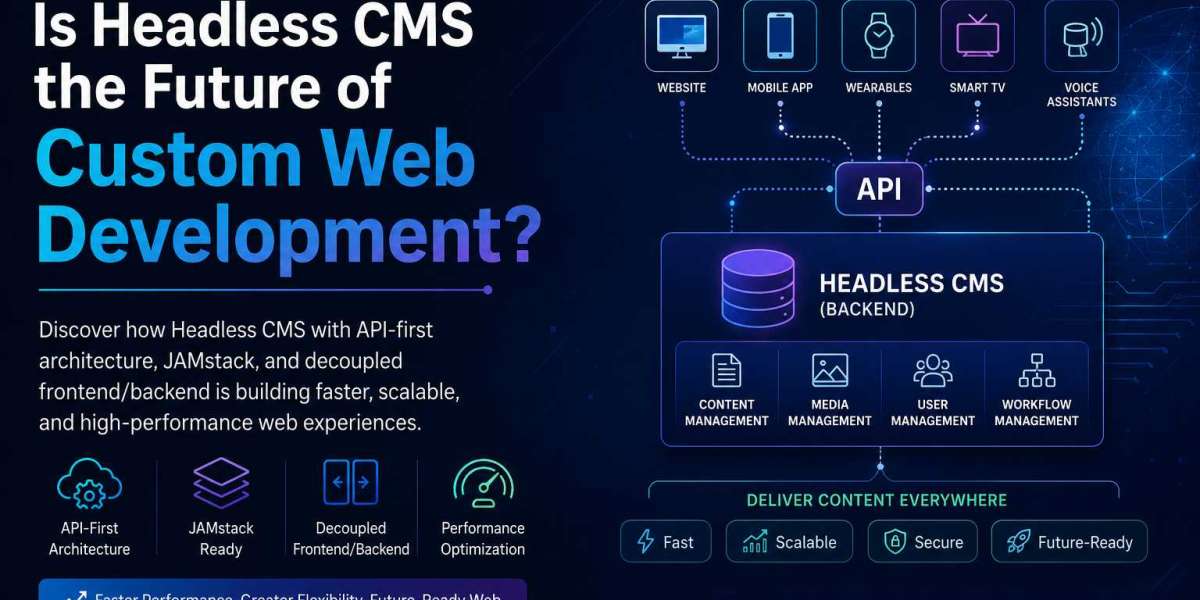

The digital landscape is evolving rapidly, and businesses today require faster, more scalable, and highly flexible web platforms to stay competitive. Traditional content management systems are no longer enough for organizations looking to deliver seamless user experiences across websites, mobile apps, smart devices, and emerging digital channels.
This is where Headless CMS architecture is changing the future of custom web Development.
By separating the frontend presentation layer from the backend content management system, Headless CMS platforms enable businesses to create high-performance, API-driven digital ecosystems that are scalable, secure, and optimized for modern user demands.
As technologies like JAMstack, API-first architecture, cloud-native infrastructure, and microservices continue growing, many experts believe Headless CMS is becoming the foundation of next-generation web applications.
What Is a Headless CMS?
A Headless CMS is a backend-only content management system where the frontend and backend operate independently.
Unlike traditional CMS platforms where content management and frontend rendering are tightly connected, a headless approach delivers content through APIs, allowing developers to use any frontend technology they prefer.
Traditional CMS Structure:
- Backend + frontend tightly coupled
- Limited frontend flexibility
- Slower performance scaling
- Platform dependency
Headless CMS Structure:
- Decoupled architecture
- API-based content delivery
- Frontend freedom
- Better scalability speed
This flexibility is one of the major reasons modern businesses are shifting toward headless technologies.
Why Businesses Are Adopting Headless CMS
Modern digital businesses no longer operate on a single platform. Content now needs to be distributed across:
- Websites
- Mobile apps
- Smart TVs
- IoT devices
- Voice assistants
- Wearables
- Progressive Web Apps (PWAs)
A Headless CMS enables centralized content management while delivering content seamlessly across multiple digital channels.
Key Business Benefits:
- Faster website performance
- Omnichannel content delivery
- Better scalability
- Improved developer flexibility
- Enhanced security
- Easier third-party integrations
Businesses working with a modern web Development Company are increasingly choosing Headless CMS architectures to support digital transformation strategies.
API-First Architecture Is Driving the Future
One of the biggest reasons Headless CMS is gaining popularity is its API-first architecture.
Instead of relying on traditional rendering systems, Headless CMS platforms distribute content using REST APIs or GraphQL APIs.
Advantages of API-First Systems:
- Faster frontend development
- Seamless third-party integration
- Better mobile compatibility
- Flexible frontend frameworks
- Easier scalability
This architecture allows developers to create dynamic and highly interactive user experiences using modern frontend technologies like:
- React
- Next.js
- Vue.js
- Angular
- Nuxt.js
Related SEO Keywords:
- API-driven platforms
- cloud-native architecture
- modern frontend frameworks
- scalable web applications
- enterprise web systems
JAMstack Is Revolutionizing Website Performance
JAMstack (JavaScript, APIs, and Markup) has become one of the most powerful approaches in modern web architecture.
Headless CMS platforms integrate perfectly with JAMstack because content is delivered via APIs while static pages are pre-rendered for faster loading speeds.
Benefits of JAMstack:
- Lightning-fast performance
- Improved SEO rankings
- Better scalability
- Reduced server dependency
- Enhanced security
Performance optimization is becoming a critical ranking factor for search engines and user experience, making JAMstack-based platforms increasingly valuable.
Decoupled Frontend Backend Improves Flexibility
Traditional CMS platforms often limit developers due to tightly connected systems. Headless CMS solves this issue through decoupled architecture.
Advantages of Decoupled Systems:
- Independent frontend updates
- Faster deployment cycles
- Better scalability
- Improved user experiences
- Easier technology upgrades
Developers can redesign frontend experiences without affecting backend content management systems.
This flexibility allows businesses to innovate faster while maintaining operational stability.
Performance Optimization Matters More Than Ever
Website performance directly impacts:
- SEO rankings
- User retention
- Conversion rates
- Bounce rates
- Customer satisfaction
Headless CMS platforms significantly improve performance because:
- Content is delivered through APIs
- Static rendering improves loading speed
- CDN distribution reduces latency
- Frontend optimization becomes easier
Performance-Focused Technologies:
- Edge computing
- CDN optimization
- Static site generation
- Lazy loading
- Image optimization
Organizations investing in advanced web Development Solutions are prioritizing performance-focused architectures to improve digital experiences.
Headless CMS Supports Omnichannel Experiences
Consumers now interact with businesses across multiple digital touchpoints. A Headless CMS allows organizations to maintain consistent content experiences across:
- Websites
- Mobile applications
- Smart devices
- eCommerce stores
- Digital kiosks
- Voice assistants
This omnichannel capability is essential for businesses focused on customer engagement and digital scalability.
Security Advantages of Headless Architecture
Cybersecurity is becoming increasingly important as businesses handle large volumes of sensitive user data.
Headless CMS platforms improve security because:
- Frontend and backend are separated
- Attack surfaces are reduced
- API authentication improves control
- Static websites reduce vulnerabilities
Modern Security Features:
- Zero-trust architecture
- API security management
- Multi-factor authentication
- Cloud-native protection systems
These security advantages make Headless CMS attractive for enterprise businesses and SaaS platforms.
Challenges of Headless CMS
While Headless CMS offers many benefits, there are also challenges businesses should consider.
Common Challenges:
- Higher initial development complexity
- Requires experienced developers
- API management complexity
- Additional frontend development effort
- Content preview limitations
Businesses should evaluate their technical requirements and long-term scalability goals before migrating to a headless architecture.
Industries Rapidly Adopting Headless CMS
Headless CMS adoption is growing across multiple industries, including:
- eCommerce
- Healthcare
- Education
- Media publishing
- Fintech
- SaaS platforms
- Logistics
- Enterprise software
Companies investing in professional web Development Services are increasingly choosing Headless CMS to future-proof their digital ecosystems.
Future Trends in Headless CMS
The future of Headless CMS will likely include:
- AI-powered content personalization
- Voice-enabled content delivery
- Edge-rendered experiences
- Real-time content management
- Serverless deployment models
- Advanced API orchestration
As digital experiences become more complex, Headless CMS will continue evolving as a core technology for scalable web ecosystems.
Is Headless CMS Truly the Future?
For many businesses, the answer is yes.
Headless CMS provides:
- Greater flexibility
- Faster performance
- Better scalability
- Improved omnichannel experiences
- Future-ready architecture
However, not every business requires a fully headless solution. Smaller websites with simple requirements may still benefit from traditional CMS platforms.
The real value of Headless CMS becomes evident for businesses requiring scalability, personalization, performance optimization, and multi-platform digital experiences.
Conclusion
Headless CMS is rapidly transforming modern web architecture by enabling API-first development, JAMstack integration, decoupled systems, and highly optimized digital experiences.
As businesses continue investing in scalable and performance-focused technologies, Headless CMS platforms are becoming a major component of next-generation digital ecosystems.
Organizations looking to stay competitive in the evolving digital economy are increasingly adopting modern architectures that prioritize speed, flexibility, security, and omnichannel content delivery.
The future of web development is no longer just about building websites — it’s about creating intelligent, scalable, and connected digital experiences.