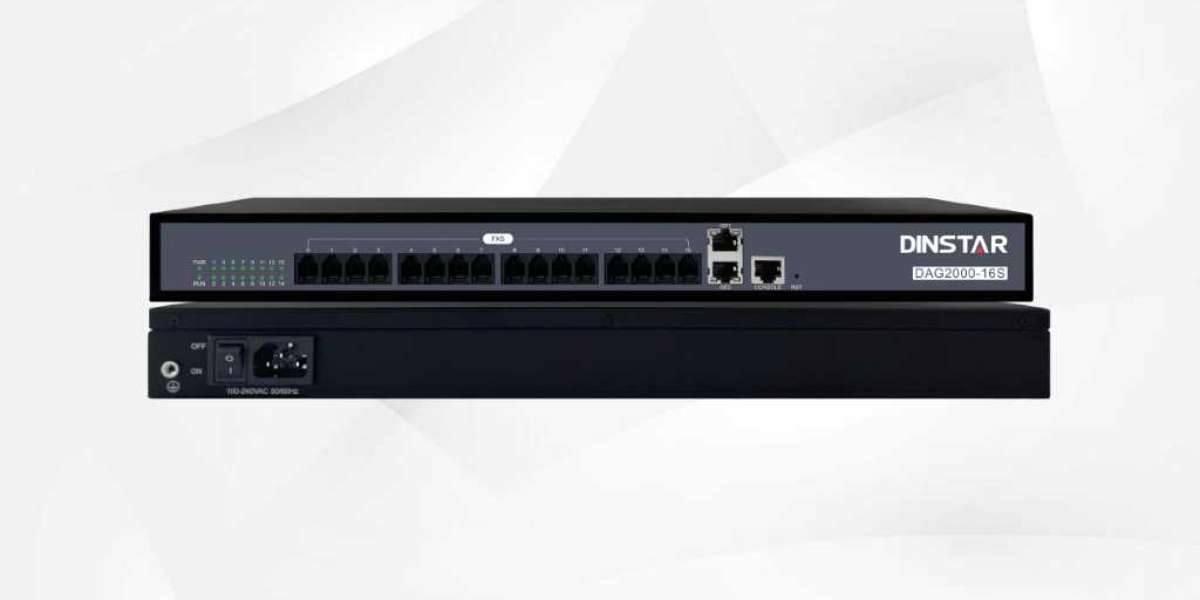

In modern business communication, companies often need to connect traditional analog phones with IP-based systems. This is where a 16 FXS Gig Port gateway becomes essential. It acts as a bridge between analog telephony devices and VoIP networks, allowing businesses to upgrade their communication systems without replacing existing equipment.
Understanding how it works and why it matters can help organizations make smarter infrastructure decisions.
What is 16 FXS Gig Port?
A 16 FXS Gig Port device is a VoIP gateway equipped with sixteen FXS (Foreign Exchange Subscriber) ports along with a Gigabit Ethernet interface. The FXS ports allow analog devices such as telephones and fax machines to connect to an IP network.
The Gigabit port ensures high-speed network connectivity, delivering stable data transmission and better voice clarity. This combination makes it suitable for environments where multiple analog extensions need to operate on a unified IP-based system.
How Does It Work?
The device converts analog voice signals into digital packets that can travel over IP networks. When a user makes a call through an analog phone connected to the FXS port:
The analog voice signal is received by the gateway.
The signal is converted into digital data using supported codecs.
The digital packets are transmitted through the Gigabit Ethernet port to the IP PBX or VoIP server.
The process is reversed for incoming calls.
This seamless conversion ensures smooth communication between analog and IP environments.
Key Features of 16 FXS Gig Port
A 16 FXS Gig Port gateway typically offers:
SIP protocol compatibility with major IP PBX platforms
Multiple voice codecs for optimized bandwidth usage
Echo cancellation and jitter buffering for clear calls
Gigabit Ethernet for high-speed data handling
Flexible dial plans and call routing options
Web-based configuration and monitoring
These features enhance performance, reliability, and ease of management.
Benefits for Businesses
Smooth Migration to VoIP
Organizations can continue using existing analog phones while gradually shifting to IP telephony. This reduces upfront investment.
Cost Savings
VoIP call routing significantly lowers communication expenses, especially for long-distance and inter-branch calls.
Scalability
With sixteen ports available, businesses can support multiple users simultaneously and expand as needed.
Improved Network Performance
The Gigabit interface ensures that voice traffic does not suffer from congestion, even in busy network environments.
Where is 16 FXS Gig Port Used?
This solution is commonly deployed in:
Corporate offices
Educational institutions
Hospitals
Hotels
Government offices
These sectors often require centralized communication systems while maintaining multiple analog endpoints.
Conclusion
A 16 FXS Gig Port gateway is a practical solution for businesses seeking reliable analog-to-IP integration. It provides flexibility, scalability, and enhanced voice quality through Gigabit connectivity. By enabling a smooth transition from traditional telephony to VoIP, it supports long-term communication growth without disrupting existing infrastructure.